From Logic to Intuition: How Remote Viewing Changed the Way I Think
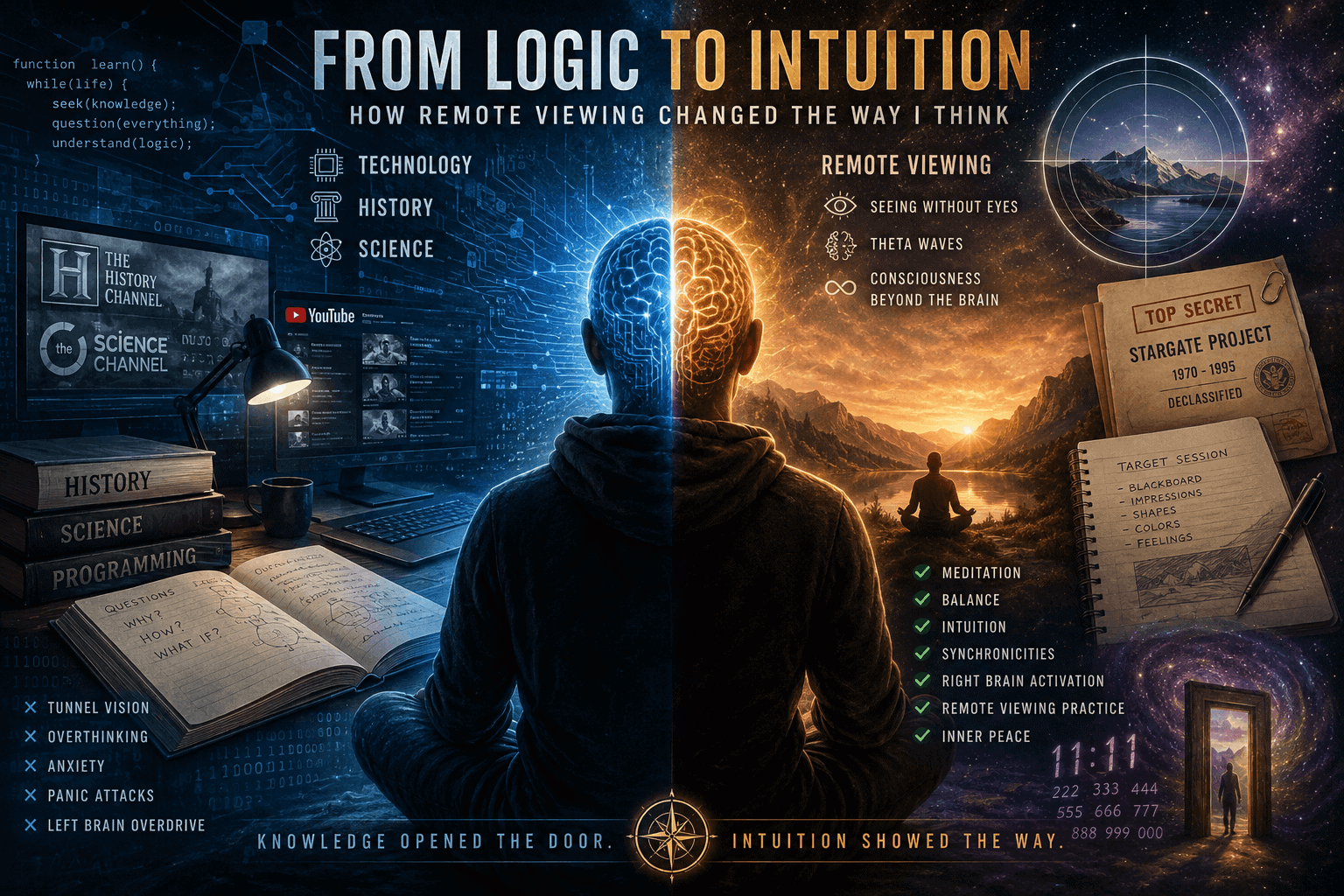
My journey into remote viewing and consciousness began in an unexpected place: a lifelong obsession with knowledge, logic, technology, history, and science. For most of my life, I relied almost entirely on analytical thinking and believed that if I could learn enough, research enough, and understand how something worked, I could find an answer to almost anything.
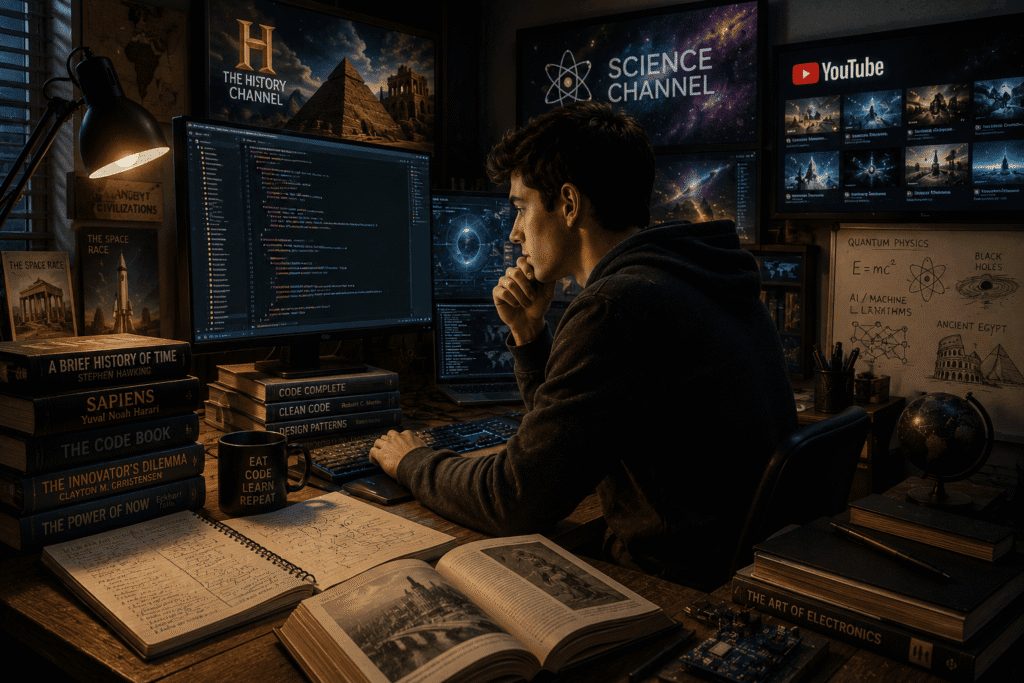
I got into computers and coding at a very young age. Technology fascinated me, but my curiosity was never limited to computers. I wanted to learn about almost everything, especially technology, history, and science.
When Knowledge Becomes Tunnel Vision
For years, I saw this constant search for knowledge as nothing but a strength. Eventually, however, I began noticing that there was another side to it.
I developed incredible tunnel vision.
I could become so absorbed in learning one subject and then jumping to another that ordinary things could disappear from my awareness. Something as simple as remembering to pay a bill could get pushed aside—not because I didn’t have the money, but because my attention was somewhere completely different.
My mind always needed another problem to solve.
Another question.
Another piece of information.
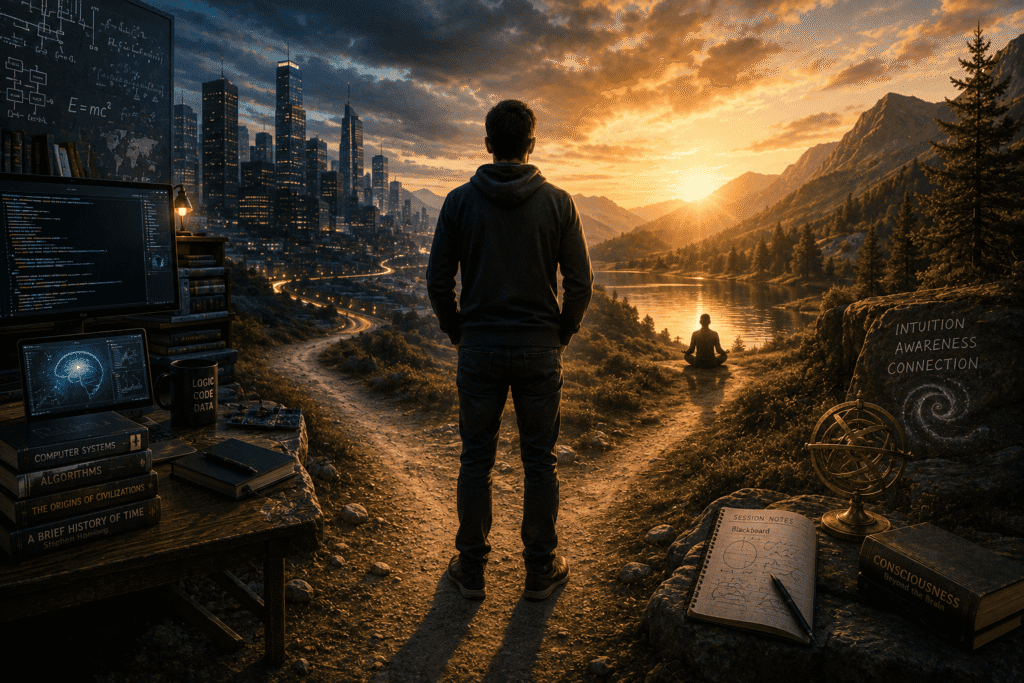
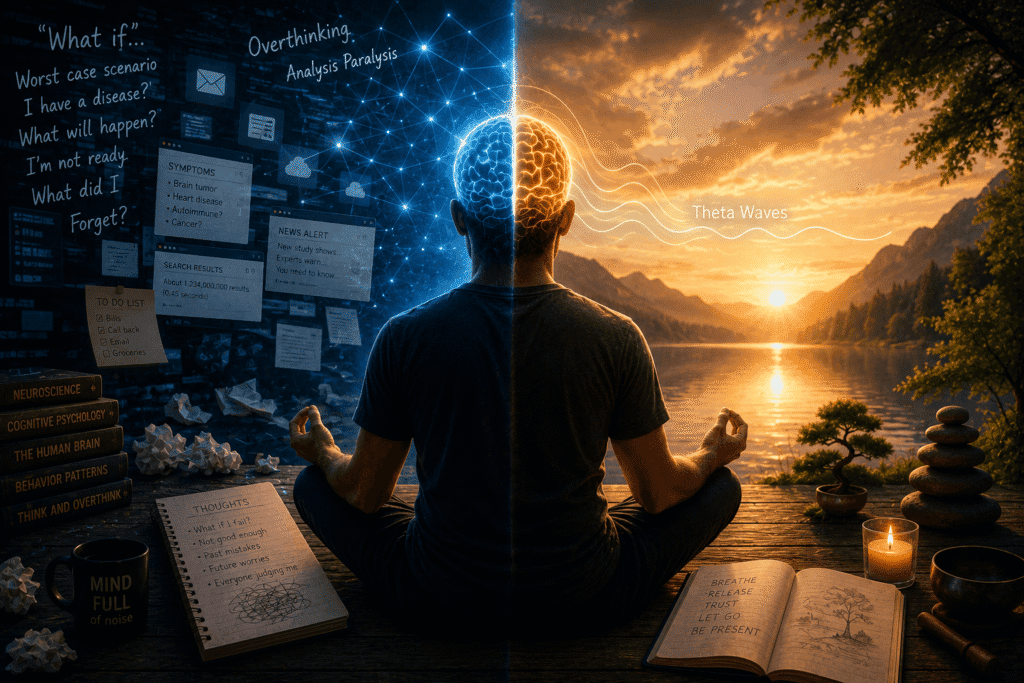
I began thinking of this as having developed one side of myself far more than the other. I had spent years strengthening the analytical, logical part of my thinking while giving very little attention to intuition, stillness, or simply allowing information to come without immediately analyzing it.
The same analytical ability that helped me understand computers could also turn against me.
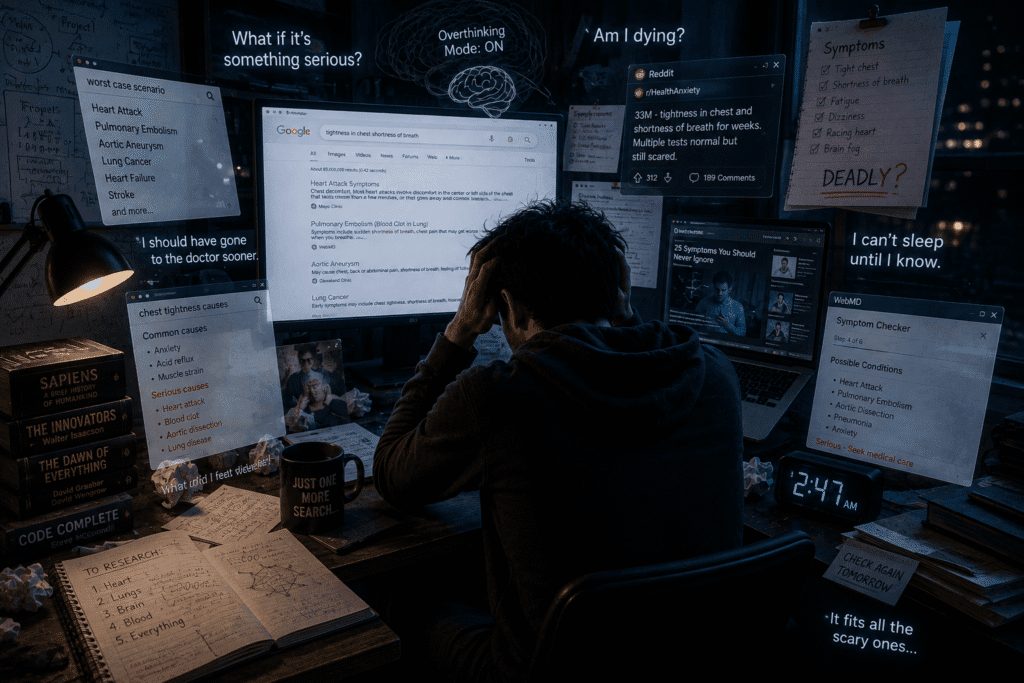
If I noticed a health symptom, for example, my immediate reaction was to research it. One search became ten searches. Before long, my mind had gone through every possible explanation and landed on the worst one.
My brain didn’t know when to stop solving the problem.
Eventually, I began experiencing severe anxiety and panic attacks. My thoughts sometimes felt like they were moving a hundred miles an hour.
Something needed to change.
Learning How to Quiet My Mind
I started meditating and stopped drinking coffee. Those changes helped me tremendously.
Meditation also led me into researching brain states and brain waves. I became fascinated by the difference between the faster beta activity commonly associated with active thinking and the slower alpha and theta activity often associated with relaxation, meditation, and internal attention.
That gave me a new objective.
Instead of constantly feeding my analytical side, I wanted to explore the intuitive side of my mind.
I wanted balance.
As I began meditating and paying more attention to intuition, I also started noticing strange coincidences—or what many people call synchronicities. Repeating number patterns seemed to appear everywhere. Events sometimes lined up in ways that felt unusually meaningful.
Whether every synchronicity has some deeper explanation is impossible for me to prove. But they made me curious.
And curiosity has always been the thing that drives me.
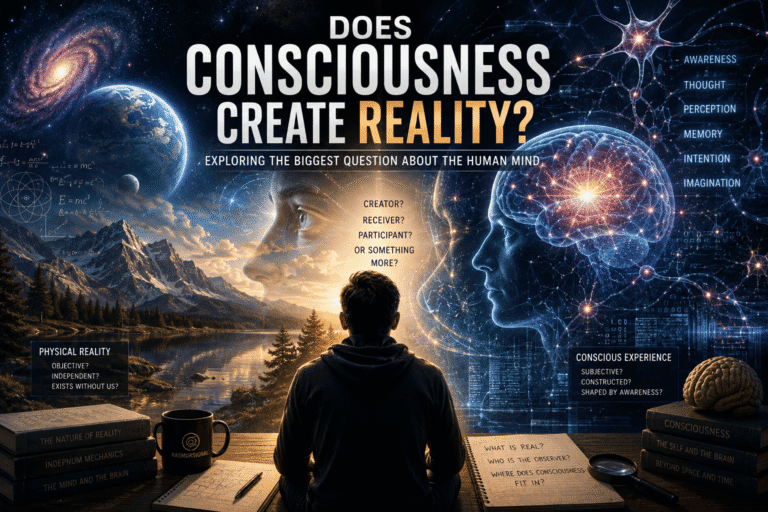
I started asking a much bigger question:
Is consciousness entirely produced by the brain, or could consciousness somehow extend beyond it?
I had always felt there might be more to consciousness than we currently understand. But feelings weren’t enough for me.
I wanted something I could actually test.
That search eventually led me to remote viewing.
Discovering Remote Viewing
When I first encountered remote viewing, my skeptical side immediately kicked in.
Psychic functioning?
Information obtained without using the normal senses?
That sounded like exactly the type of claim I normally would have dismissed.
But then I started researching the history.
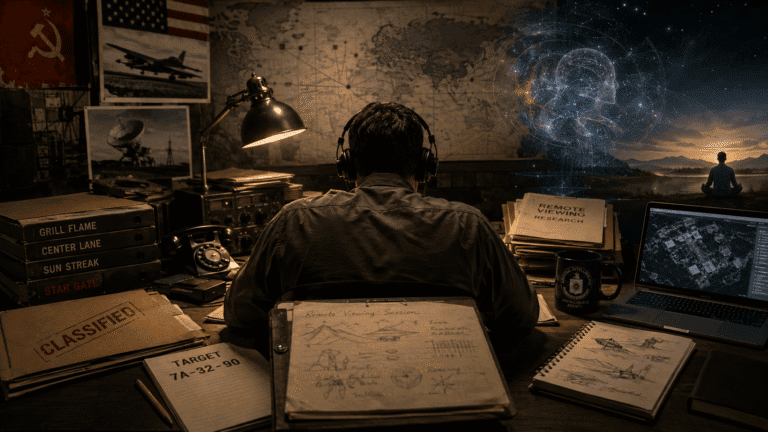
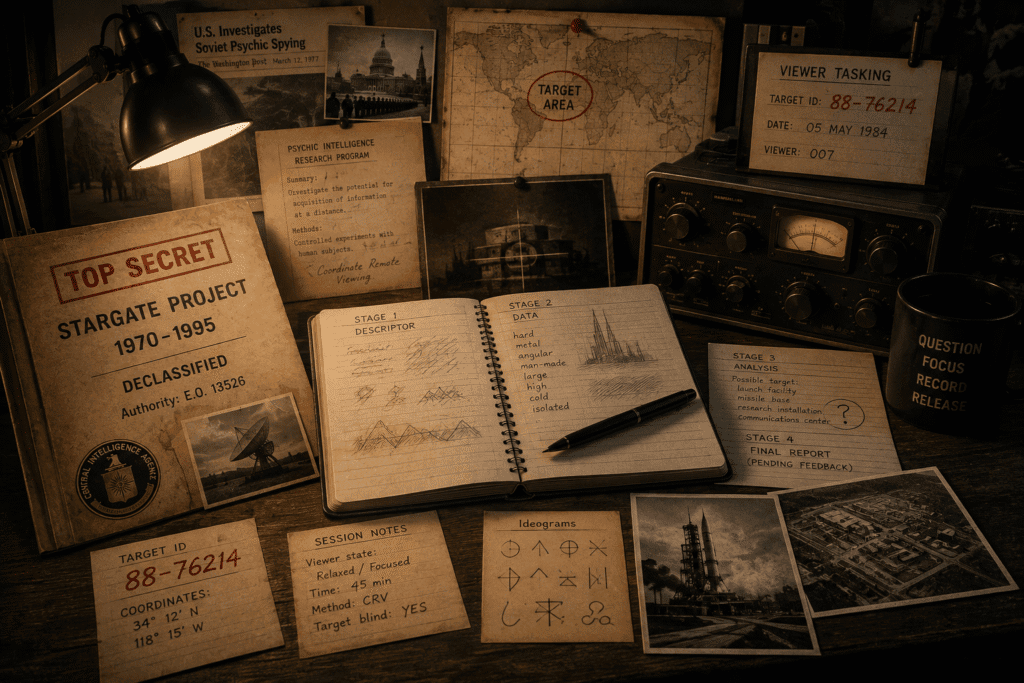
During the Cold War, American intelligence agencies became concerned about Soviet research into psychic phenomena and their possible military applications. The United States subsequently funded its own research into what eventually became popularly associated with the Stargate program.
Researchers and military personnel investigated whether people could describe distant or hidden targets without being given ordinary information about them.
What interested me most wasn’t simply the stories about psychics.
It was the attempt to make the phenomenon structured and repeatable.
One of the major developments was Controlled Remote Viewing, or CRV, associated with Ingo Swann and the researchers who worked with him. Instead of treating psychic perception as something reserved for a handful of naturally gifted people, structured remote-viewing methods attempted to break the process into stages and procedures that could be practiced.
That completely changed how I looked at it.
I didn’t have to believe someone else’s story.
I could try it myself.
My First Steps Into Remote Viewing
My remote-viewing journey began with Paul H. Smith’s online CRV material.
Coming from computers and science, I liked the structured nature of CRV. There were procedures to follow instead of simply sitting down and trying to “be psychic.”
Later, I moved into Birdie Jaworski’s Trans-Dimensional Mapping (TDM) training. I completed the program through the advanced material and then spent several months practicing what I had learned.
During that practice, I began noticing something interesting about the way information appeared to me.
I seemed to respond particularly well to visual information.
When I probed information during sessions, I would sometimes experience colors, patterns, shapes, or other visual impressions. That made me wonder whether another remote-viewing methodology might fit the way my mind naturally processed information.
That’s when I discovered the Hawaii Remote Viewers’ Guild (HRVG).
Finding HRVG
I came across videos from HRVG viewers, including material involving Dick Allgire, and immediately noticed something different.
The viewer would close his eyes.
There was also something called Blackboard, a mental visual space used within the HRVG methodology.
That caught my attention immediately.
I remember thinking:
This might be the method for me.
HRVG was founded by Glenn Wheaton and developed its own structured methodology for training remote viewers. What attracted me was its emphasis on extracting different forms of sensory and visual information while maintaining a disciplined protocol.
In January 2026, I began HRVG training with Nyiam. I completed the course in April.
After completing my training and putting in the work, I was invited to participate with Enigma Looking Glass, a group that includes trained viewers who continue practicing and developing their skills.
That continuing practice turned out to be extremely important to me.
Why the Group Matters
One of my favorite things about Enigma Looking Glass is that remote viewing isn’t treated as something you learn once and then walk away from.
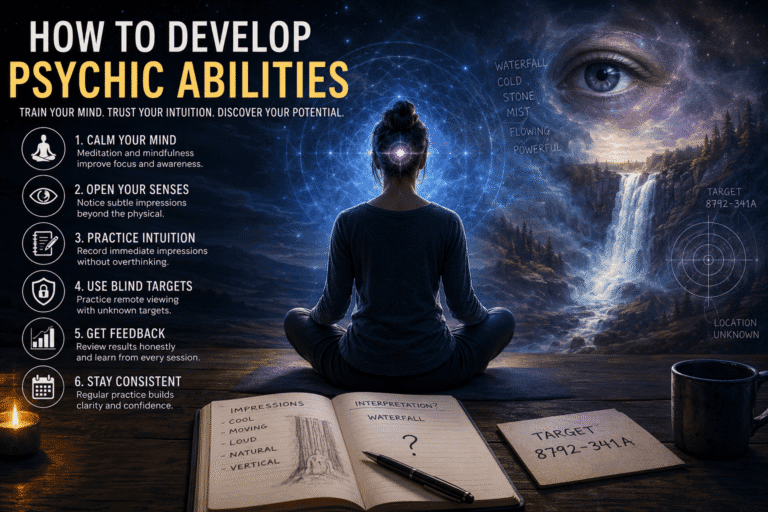
We meet on Zoom every Thursday and Sunday. We receive targets to work, complete our sessions blind, and later receive feedback.
That feedback is critical.
You aren’t simply sitting around telling stories about psychic experiences. You put information on paper before knowing the target, and then you compare what you recorded against the actual feedback.
Sometimes you get things wrong.
Sometimes you get something interesting.
And occasionally you produce information that makes you stare at the feedback and wonder:
How did I get that?
The group environment is equally important.
Glenn Wheaton has discussed the idea that remote viewing can be inherently destabilizing. I understand why that warning matters. When you start seriously questioning your assumptions about consciousness, perception, time, and reality, it can affect the way you look at the world.
Having other trained viewers around you provides perspective. We can compare experiences, discuss our work, laugh about the strange parts, and remind each other to remain grounded.
Remote viewing should not mean abandoning logic.
For me, it has meant learning that logic and intuition can exist together.
What Changed in Me
The biggest surprise from this journey wasn’t a particular target or session.
It was what happened to my mind.
For most of my life, my internal world was dominated by analysis. My brain constantly wanted to calculate, predict, research, and prepare for every possible outcome.
Meditation began slowing that process down.
Remote-viewing practice pushed me even further toward quieting the analytical mind and paying attention to subtle impressions before immediately trying to explain them.
Over months of practice, I began feeling more balanced.
My thoughts stopped feeling like they were constantly traveling a hundred miles an hour. The panic attacks that had become part of my life stopped occurring.
I can’t scientifically claim that remote viewing caused that change, and I don’t want to present my personal experience as medical advice. Meditation, eliminating caffeine, lifestyle changes, and other factors may all have contributed.
But subjectively, something important changed.
For the first time in my life, I wasn’t trying to think my way through everything.
Sometimes I could simply observe.
The Question of Consciousness
Remote viewing has left me with questions much bigger than the phenomenon itself.
If accurate information can sometimes be obtained about a target that a viewer has no ordinary sensory access to, where is that information coming from?
What does that tell us about consciousness?
And perhaps the biggest question:
What exactly are we?
I don’t pretend to have the final answer.
There are extraordinary claims surrounding remote viewing, consciousness, psychic phenomena, and the nature of reality. Some have stronger evidence behind them than others. I think it’s important to distinguish documented history and controlled experiments from speculation and personal belief.
But I also don’t believe that skepticism should mean refusing to investigate something.
My entire life has been driven by curiosity.
Computers taught me logic.
History taught me perspective.
Science taught me to question.
Meditation taught me to become quiet.
And remote viewing taught me that sometimes the most interesting experiment is the one you can perform yourself.
Finding Balance Between Two Worlds
Today, I still love technology, history, science, computers, and learning.
That hasn’t changed.
What has changed is my relationship with knowledge.
I no longer believe every question has to be attacked immediately by the analytical mind. Sometimes information needs to be observed before it is interpreted. Sometimes uncertainty is okay.
I spent decades developing one side of myself.
Now I’m exploring the other.
And that creates an unusual problem.
Most people have never seriously investigated remote viewing. When you talk about it openly, reactions can range from genuine curiosity to people assuming you’re crazy, involved with something demonic, or part of some strange cult.
I understand the skepticism because I started as a skeptic too.
I’m not asking anyone to believe what I believe.
That’s one reason I created RasmurSignal.
I want to document the journey.
I want to show sessions.
I want to show the target feedback.
I want people to see the successes and the misses.
Most importantly, I want people to be able to look at the information and decide for themselves.
Because after spending most of my life searching for knowledge, I’ve realized something:
The questions we don’t completely understand are often the ones most worth investigating.
And for me, the biggest question of all is consciousness.